
Back to Blog
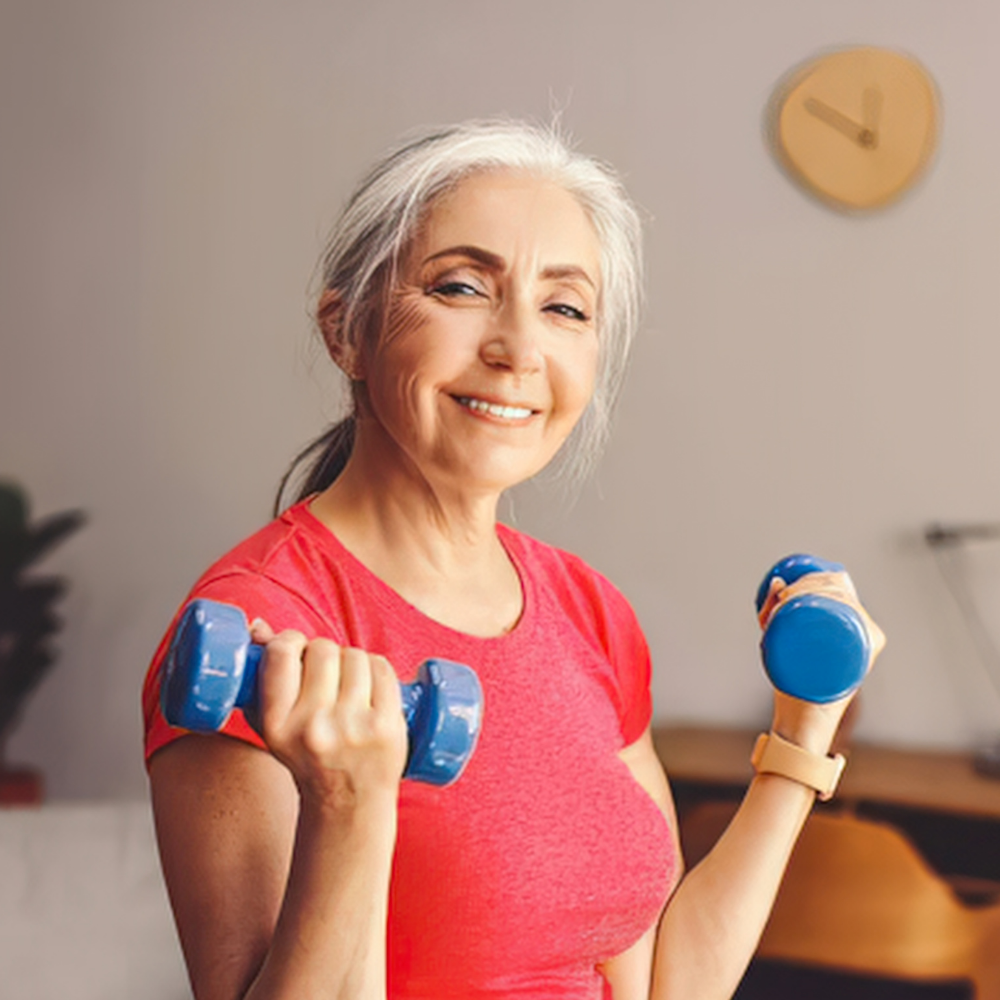
Menopause joint pain is common, but it doesn’t have to end your training. A program that worked for years might suddenly cause niggles. Your hip might ache at night, or your knee might grumble after squats. This isn’t a sign you’re doing something wrong. It’s your body responding to hormonal change.
This blog builds on our Women’s Health Week talk at Fernwood, where we explored this year’s Jean Hailes theme, do it anyway. Our goal is to help you keep exercising through a flare, not stop. First, we’ll explain why your body feels different during perimenopause and menopause. Next, we’ll cover three common issues that stop women training: hip pain, knee osteoarthritis and pelvic floor symptoms. Finally, you’ll learn a simple “swap, don’t stop” approach for each one.
Why Menopause Joint Pain Happens
Oestrogen does far more than most of us realise. As levels change, it affects tissues right through your body:
- Bone: Bone loss speeds up in the years around your final period. It responds best to heavy load and impact, not just general movement.
- Tendons and connective tissue: Oestrogen influences collagen and tendon stiffness. That’s why tendon problems and frozen shoulder cluster in this window.
- Muscle and power: Muscle mass declines from your 30s. Power drops faster than strength, and power is what helps you recover from a stumble or trip.
- Recovery and joints: The same session can take longer to bounce back from. Joint aches are also a recognised part of menopause.
This is physiology, not weakness. Understanding it helps you train smarter instead of stopping altogether. To learn which types of training support these changes, read Why Exercise During Menopause Matters (and What Kind is Best).
The Golden Rule: Pain Doesn’t Always Mean Damage
Before we look at specific conditions, one idea changes everything: pain doesn’t mean stop. It means change something.
Many women hear “rest until it stops hurting.” Unfortunately, that advice can cost years of training. Instead, we use a simple pain scale, adapted from GLA:D® Australia education materials:
- 0 (safe): little to no pain
- 1-3 (acceptable): some pain during exercise is normal
- 4–10 (high risk): time to modify
Aim to stay in the safe and acceptable zones.
The 24-Hour Rule
Pain should settle back to its usual level within 24 hours of a session. If it doesn’t, you haven’t damaged anything. You simply did a bit too much, so drop the intensity next time.
Hip Pain in Menopause: Lateral Hip Pain (GTPS)
You might know this one as “hip bursitis.” In most cases, though, the main driver is the glute tendons where they attach to the outside of the hip. Physios call this greater trochanteric pain syndrome, or GTPS. Scans often report a bursa, but tendon load and compression usually drive the pain. That difference changes how we manage it.
What GTPS Feels Like
- Pain over the bony point on the outside of your hip
- Trouble lying on that side at night
- Soreness on stairs, on hills or when standing on one leg
- Pain that grumbles for months rather than arriving suddenly
Why It Flares Around Menopause
GTPS is most common in women aged 40–60 (Speers & Bhogal, 2017). As oestrogen falls, tendons become less tolerant of load and slower to adapt. A busy week, a new class or extra running can then tip the tendon over.
What’s Flaring Your Hip: Compression
Compression happens when something pulls your knee across your body’s midline. Common culprits include:
- Sitting with your legs crossed
- Standing hanging on one hip (the classic “toddler on the hip” stance)
- Sleeping on the sore side, or with your top knee dropped forward
- Deep glute and ITB stretches, including pigeon pose
- Foam rolling the outside of the hip
- A sudden jump in hills or running
Yes, the stretch that feels so productive might be making it worse.
Swap, Don’t Stop: Lateral Hip Pain
- Stretching the outer hip? Try foam rolling the middle third of the outer thigh or use a massage ball through the muscles of the bottom.
- Long hilly runs or stair sessions? Keep walking, but flatten your route while it settles. Also try decreasing your stride length.
- Deep lunges and pigeon stretch? Swap to bridges, sit-to-stands and step-ups in a comfortable range.
- Sleeping with your top knee dropped? Pop a pillow between your knees and stay off the sore side for now.
- Hanging on one hip? Stand with even weight through both feet.
Tendons respond to steady, progressive load, so think in weeks rather than days. Many people need 6–12 weeks of consistent loading before they notice a real change. For a deeper dive, read our two-part series, From Pain to Strength: How to Navigate Hip Bursitis (Part 1) and Part 2.
Is It the Tendon or the Joint?
- Tendon (GTPS): pain on the outside of the hip that’s sore to touch and worse in compression positions.
- Joint (hip osteoarthritis): deep pain in the groin or front of the hip, morning stiffness, and trouble putting on socks or getting out of the car.
Different problems need different plans. That’s why “hip pain” on its own isn’t a diagnosis.
Knee Pain in Menopause: Osteoarthritis
“It’s just wear and tear” is one of the least helpful phrases in joint health. If osteoarthritis were simple wear and tear, rest would help. It doesn’t, because cartilage needs load to stay healthy.
Why Cartilage Needs Movement
Think of cartilage as a sponge. Load presses fluid out, and unloading draws it back in. Cartilage has no blood supply of its own, so this pumping action delivers its nutrition. No load means no exchange.
The scan isn’t the whole story either. Some people have major changes on imaging and no symptoms. Others have symptoms for years before anything shows up. That’s why clinicians diagnose osteoarthritis based on your symptoms, not your x-ray.
Why It Shows Up Around Menopause
- Osteoarthritis is very common. Around 2.1 million Australians live with it across all joints, according to the Australian Institute of Health and Welfare.
- Women develop knee osteoarthritis more often than men, and rates climb after menopause.
- Falling oestrogen affects cartilage, the bone under the joint and the surrounding soft tissue.
- Weaker quads and glutes shift load into places the joint isn’t shaped to take.
- Old injuries count too, so that netball knee from your teens may matter now.
Exercise Is the Treatment, Not the Risk
Australian guidelines from the RACGP recommend land-based exercise for everyone with knee or hip osteoarthritis. That applies regardless of age, scan results or current pain levels. As a general guide:
- 2 sessions per week is a realistic minimum.
- 3–4 sessions per week is where better outcomes tend to sit.
- 6 weeks minimum before you judge whether it’s working.
Include strength and control work, not just cardio. Most importantly, the right exercise is the one you’ll actually do. Our Clinical Pilates and clinical exercise programs draw on this same evidence base, including GLA:D principles.
Swap, Don’t Stop: Knee Osteoarthritis
- Avoiding squats and lunges? Shorten the range with box squats or split squats to a bench.
- Deep, loaded knee bending? Keep the load but reduce the depth while it settles.
- Two weeks’ rest after a flare? Deload for a session or two, then build back gradually.
- Running through a hot, swollen knee? Switch to the bike, rower or pool for a week first.
- Waiting until it stops hurting? Start now, within the acceptable pain zone.
Aim for good control and avoid limping. A limp shifts load onto everything else.
Pelvic Floor Symptoms During Menopause
Leaking with jumps or heavy lifts is common during and after menopause. In fact, Continence Health Australia reports that over 55% of postmenopausal women experience incontinence. Prolapse is also common. The International Consultation on Incontinence reports some degree of prolapse in around 41% of women over 50. Many women quietly drop exercises because of these symptoms. But common isn’t the same as normal, and these symptoms are treatable.
Why Squeezing on the Couch Isn’t Enough
Lower oestrogen reduces blood flow and thins the tissue. Your pelvic floor also gets less support from the surrounding fascia and ligaments.
Leaking happens when pressure inside the bladder beats the closing pressure of the urethra (the tube you wee through). A cough, jump or heavy lift spikes that pressure. Your pelvic floor needs to switch on quickly, at the right moment, under load. Yet most women only ever learn to squeeze lying down.
Swap, Don’t Stop: Pelvic Floor Symptoms
- Giving up the class? Try step-ups, marching and low-impact options while you rebuild.
- Holding your breath on heavy lifts? Breathe out on the effort instead of bearing down.
- Feeling heavy on a particular day? Choose seated or supported versions of standing exercises.
- Kegels on the lounge and hoping? Get an assessment first. In one clinical trial, around a quarter of women didn’t respond to pelvic floor training alone (Bø, 2003). They may need a different approach or a support device, like a pessary.
A pelvic floor physio can assess what your pelvic floor does under load. To learn more, read Why Haven’t My Pelvic Floor Exercises Worked? and Running With Prolapse: Can You Keep Running?
Other Menopause Aches and Injuries Worth Knowing About
- Frozen shoulder: Most people diagnosed are women aged 40–60 (Ramirez, 2019). If your shoulder is losing range, not just feeling sore, get it checked early. Swap: overhead press for landmine or incline press, and keep the shoulder moving daily.
- Plantar heel pain: This is usually worst with your first steps in the morning. It tends to settle with the right load, not rest. Swap: long walks on hard ground for shorter walks in supportive shoes, plus calf raises.
- Achilles tendinopathy: It follows the same tendon story as the hip, slow to build and slow to settle. Swap: hills and speed work for flatter, slower running, plus heel raises.
The pattern holds: find what’s flaring it, change that one thing, and keep training around it.
When to See a Physio
You don’t need a GP referral, and you don’t need to wait until it’s unbearable. Consider booking an assessment if:
- A niggle has lasted 4–6 weeks and isn’t improving
- Pain doesn’t settle within 24 hours of a session
- You’ve started avoiding exercises or dropped a class
- You’re leaking, or feeling heaviness or dragging
- A joint is losing range, not just feeling sore
- You’re unsure what it is, and guessing is costing you training
An assessment is mostly a conversation, some movement testing and a plan you can follow. We’re also happy to work alongside your trainer, not instead of them. Read more in Women’s Health Physiotherapy in Mitcham: What to Expect at Uplift.
The Takeaway: Managing Menopause Joint Pain
Menopause joint pain can feel frustrating, but you have more control than you might think. When something flares, you have three options:
- Stop. Resting costs you strength, bone health and confidence, and the pain often returns anyway.
- Push through. Training exactly as before can turn a short-term problem into a long one.
- Do it differently. Change the one thing that’s flaring it, and keep everything else.
Take these three things home:
- Pain doesn’t mean stop. It means change something, so use the 24-hour rule.
- Find what’s flaring it. It’s usually one thing, like a position, a stretch or a spike in load.
- Swap, don’t stop. Modify the movement and keep training.
You’ve already done the hard part by showing up. Our team can help you keep going, with a plan tailored to your body and life stage. Find out more about our menopause physiotherapy services.
📞 Call us on (03) 8828 4761 or BOOK HERE to schedule your physiotherapy assessment.
References
Australian Institute of Health and Welfare. Chronic musculoskeletal conditions: Osteoarthritis. Canberra: AIHW. https://www.aihw.gov.au/reports/chronic-musculoskeletal-conditions/osteoarthritis
Bø K. Pelvic floor muscle strength and response to pelvic floor muscle training for stress urinary incontinence. Neurourology and Urodynamics. 2003;22(7):654–658.
Continence Health Australia. Menopause and incontinence: I need the loo now. https://www.continence.org.au/news/menopause-and-incontinence-i-need-loo-now
GLA:D® Australia / La Trobe University. Pain monitoring education materials.
Milsom I, Altman D, Cartwright R, et al. Epidemiology of urinary incontinence (UI) and other lower urinary tract symptoms (LUTS), pelvic organ prolapse (POP) and anal incontinence (AI). In: Cardozo L, Rovner E, Wagg A, Wein A, Abrams P, eds. Incontinence. 7th ed. Bristol, UK: International Continence Society; 2023:13–130.
Ramirez J. Adhesive capsulitis: diagnosis and management. American Family Physician. 2019;99(5):297–300.
Royal Australian College of General Practitioners. Guideline for the management of knee and hip osteoarthritis. 2nd ed. East Melbourne, Vic: RACGP; 2018.
Speers CJB, Bhogal GS. Greater trochanteric pain syndrome: a review of diagnosis and management in general practice. British Journal of General Practice. 2017;67(663):479–480.