
Back to Blog

Stress urinary incontinence (SUI) is common, but many women are surprised to learn just how many treatment options are available.
In Part 1 of this series, we explored why women leak. In Part 2, we discussed why pelvic floor exercises don’t always work.
Now let’s look at the treatment options available.
The best treatment depends on the reason you are leaking. Some women need to improve support around the bladder and urethra, while others need to improve urethral sphincter function. Many women benefit from a combination of approaches.
Pelvic Floor Muscle Training
Pelvic floor muscle training remains one of the most effective treatments for stress urinary incontinence.
However, effective pelvic floor training is about much more than simply squeezing.
Like every other muscle in the body, the pelvic floor needs to be challenged to become stronger.
One of the most common things we see in clinic is underloading. Many women are performing exercises that are not difficult enough to create meaningful change.
When performing a strengthening program, the final repetitions should feel challenging. You should be working towards fatigue.
The specific exercises prescribed will depend on your assessment findings. Some women need to focus on improving support through the larger levator ani muscles, while others require more targeted urethral sphincter strengthening.
Vaginal Weights
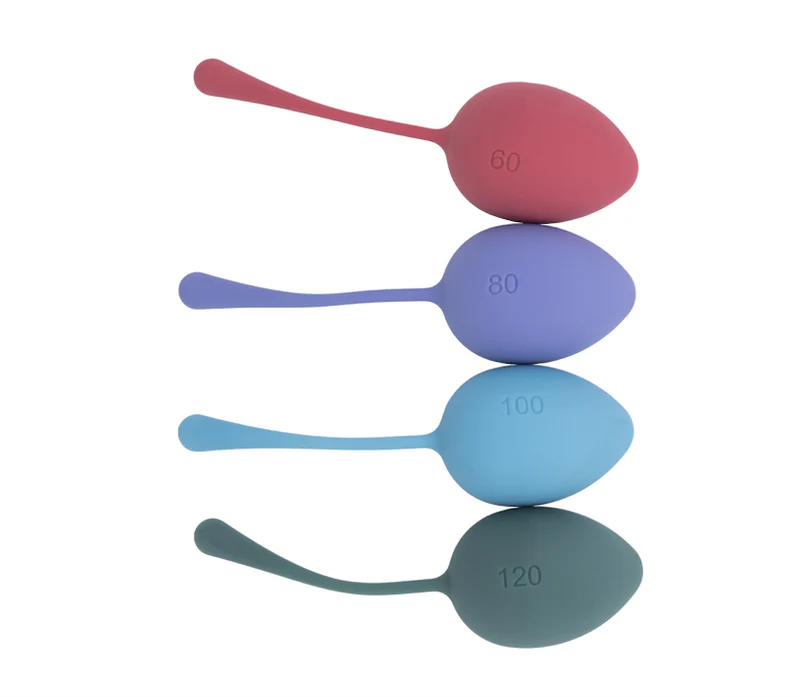
Many women are surprised to learn that vaginal weights exist.
Yet we routinely use weights to strengthen muscles throughout the rest of the body.
Vaginal weights apply the same principle to the pelvic floor.
A weighted device is inserted into the vagina and the pelvic floor muscles work to maintain its position.
For some women, vaginal weights can be an excellent way to improve strength, endurance and pelvic floor awareness.
Pessaries
Pessaries are devices inserted into the vagina to provide additional support to the bladder and urethra.
While they are commonly used for prolapse, some pessaries can also be very effective for managing stress urinary incontinence.
For some women, a pessary is a temporary support while building strength. For others, it becomes a long-term management option that allows them to exercise and participate in daily activities with confidence.
Continence Dish
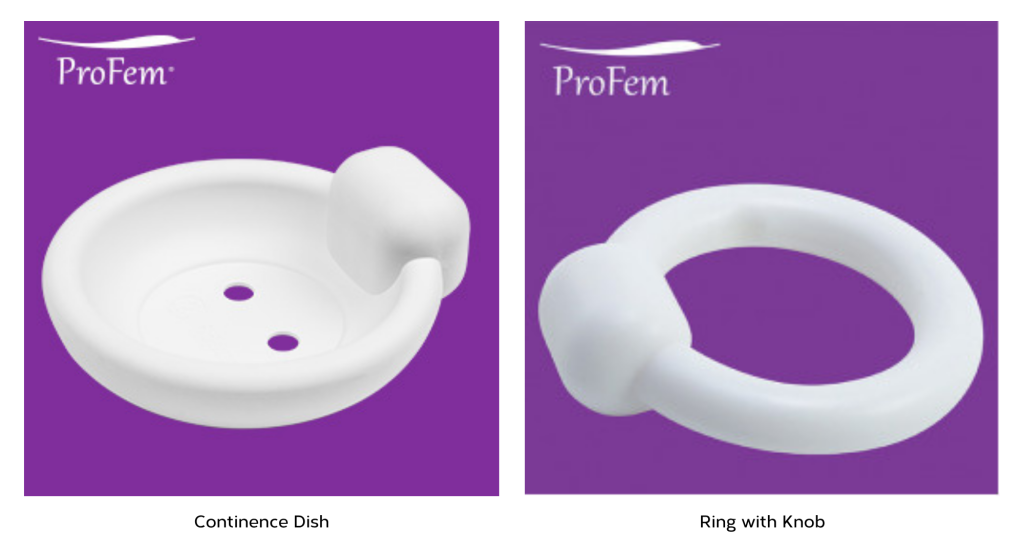
A continence dish is designed specifically for stress urinary incontinence.
It supports the urethra and can help improve closure pressure during activities such as coughing, running, jumping and lifting.
Many women choose to use a continence dish during exercise or sport.
Ring Pessary with Support Knob
A ring pessary with a support knob is often a great option for women who have both pelvic organ prolapse and stress urinary incontinence.
The ring supports the vaginal walls and pelvic organs, while the knob sits behind the urethra to provide additional support.
This can help reduce both prolapse symptoms and urinary leakage.
Intravaginal Continence Devices
Some devices are designed specifically to provide additional support during activities that increase abdominal pressure.
Contiform
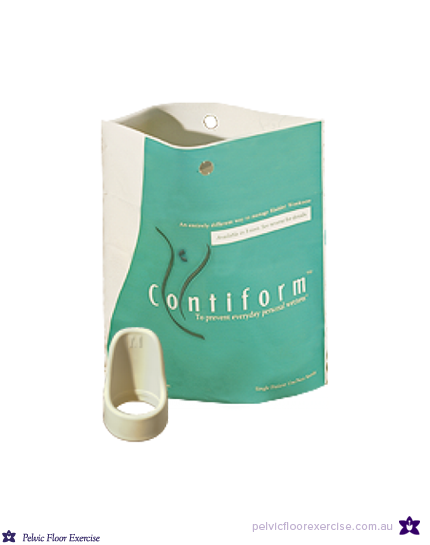
Contiform is a reusable intravaginal device designed specifically for stress urinary incontinence.
It works by supporting and compressing the urethra during activities that increase abdominal pressure.
Many women find it particularly useful for exercise and sport.
One of the advantages of Contiform is that it can be inserted before activity and removed afterwards.
Electrical Stimulation

Neuromuscular electrical stimulation (NMES) may be helpful for women who are unable to perform an effective voluntary pelvic floor contraction or who have very weak pelvic floor muscles.
A small vaginal probe is inserted into the vagina and delivers a gentle electrical current to stimulate the pelvic floor muscles.
The goal is to improve muscle activation and strength while helping the body learn how to recruit the muscles more effectively.
Tampons
Many women are surprised to learn that a tampon can sometimes help reduce stress urinary incontinence symptoms.
When inserted, a tampon can provide additional support to the bladder and urethra – creates a firm backstop behind the urethra for pressure to hit when you cough, laugh, jump etc.
A tampon is not a treatment for stress urinary incontinence, but it can be a useful temporary management strategy.
We also commonly use tampon support as a simple screening tool. If leakage improves when using a tampon, this may suggest that additional support devices such as a continence pessary or Contiform could be beneficial.
Supportive Compression Underwear
Supportive compression underwear is another option that some women find helpful for managing day-to-day symptoms.
These garments are designed to provide additional support around the lower abdomen, pelvis and pelvic floor region.

Some women report feeling more supported and confident during everyday activities such as:
- Walking
- Caring for children
- Household tasks
- Prolonged standing
- Work-related activities
While supportive compression garments do not treat the underlying cause of stress urinary incontinence, they can be a useful adjunct while working on longer-term treatment goals.
Combining Treatment Options
One of the biggest misconceptions about stress urinary incontinence treatment is that you have to choose one option.
In reality, the best outcomes often occur when multiple strategies are combined.
For example:
- A woman with urethral hypermobility may complete a pelvic floor strengthening program while using a continence dish during exercise.
- A woman with prolapse and stress urinary incontinence may use a ring pessary with support while progressing her pelvic floor program.
- A postmenopausal woman may combine pelvic floor strengthening with vaginal oestrogen therapy and a continence support device.
- A woman experiencing daily leakage may use supportive compression underwear while progressing her pelvic floor rehabilitation program.
- A woman who notices reduced leakage when using a tampon may trial a continence pessary or Contiform as part of her treatment plan.
Which Treatment Option Is Right for Me?
The answer depends on why you are leaking.
This is why assessment is so important.
Rather than asking:
“Which treatment is best?”
a better question is:
“What is causing my leakage?”
Once the underlying cause has been identified, treatment can be tailored to your specific needs.
Book an Appointment
If you’re experiencing leakage with coughing, sneezing, running, jumping, lifting or exercise, our women’s health physiotherapists can help identify the underlying cause of your symptoms and discuss the treatment options most appropriate for you.
At Uplift Women’s Health Collective, we offer comprehensive pelvic floor assessments, real-time ultrasound assessment, pelvic floor rehabilitation, pessary fitting and individualised treatment plans designed around your goals.
Book online via our website (Book Now) or call (03) 8828 4761 to speak with our team and arrange an appointment.
Learn more about how pelvic floor physiotherapy may support your recovery.